
Boring History for Sleep
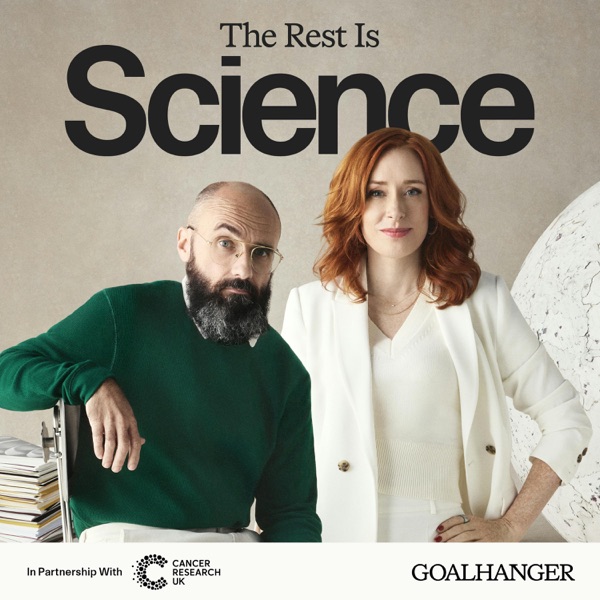
A can of fizzy drink has been violently shaken. The pressure is building, the bubbles are ready to erupt, and Michael Stevens is about to open it. But Hannah Fry has a trick up her sleeve. Can a few taps really prevent an explosion?This week on The Rest Is Science, Hannah and Michael begin with the surprisingly complicated physics of carbonation before tackling a much bigger question: can we really trust science?From the replication crisis and scientific studies that fail to stand up to scrutiny, to the strange incentives that shape what gets published, they explore why even respected scientific discoveries can turn out to be wrong...and why that might not be such a bad thing.Along the way, they investigate whether Archimedes really could have moved the Earth with a long enough lever, why aircraft are designed to withstand enormous pressure changes, and what happens when we lose our curiosity.Plus, an unexpected discussion about nuns, the dangers of absolute certainty, and why asking questions might be one…
A can of fizzy drink has been violently shaken. The pressure is building, the bubbles are ready to erupt, and Michael Stevens is about to open it. But Hannah Fry has a trick up her sleeve. Can a few taps really prevent an explosion?This week on The Rest Is Science, Hannah and Michael begin with the surprisingly complicated physics of carbonation before tackling a much bigger question: can we really trust science?From the replication crisis and scientific studies that fail to stand up to scrutiny, to the strange incentives that shape what gets published, they explore why even respected scientific discoveries can turn out to be wrong...and why that might not be such a bad thing.Along the way, they investigate whether Archimedes really could have moved the Earth with a long enough lever, why aircraft are designed to withstand enormous pressure changes, and what happens when we lose our curiosity.Plus, an unexpected discussion about nuns, the dangers of absolute certainty, and why asking questions might be one…
A can of fizzy drink has been violently shaken. The pressure is building, the bubbles are ready to erupt, and Michael Stevens is about to open it. But Hannah Fry has a trick up her sleeve. Can a few taps really prevent an explosion?This week on The Rest Is Science, Hannah and Michael begin with the surprisingly complicated physics of carbonation before tackling a much bigger question: can we really trust science?From the replication crisis and scientific studies that fail to stand up to scrutiny, to the strange incentives that shape what gets published, they explore why even respected scientific discoveries can turn out to be wrong...and why that might not be such a bad thing.Along the way, they investigate whether Archimedes really could have moved the Earth with a long enough lever, why aircraft are designed to withstand enormous pressure changes, and what happens when we lose our curiosity.Plus, an unexpected discussion about nuns, the dangers of absolute certainty, and why asking questions might be one…
For the past few decades, something strange has been happening in clinical trials. Painkillers aren't getting worse, but the placebos they're tested against appear to be getting better. In one landmark study, the advantage of pain medication over placebo shrank from 27.3% in 1996 to just 8.9% in 2013. Even stranger? This trend was found almost entirely in American trials.In this episode of The Rest Is Science, Professor Hannah Fry and Michael Stevens (Vsauce) investigate the extraordinary science of the placebo effect; how our expectations influence pain, why belief can change the way our bodies respond, and what this means for the future of medicine. Why does the way a treatment is presented matter so much? And how can simply expecting something to hurt actually make it hurt? But the placebo effect doesn't stop at medicine. From pedestrian crossing buttons that do nothing to the surprising psychology of road safety, Hannah and Michael explore just how easily our expectations can shape our experience of the…
Hannah surprises Michael with a mammoth bone from Doggerland, the lost Ice Age land that once joined Britain to mainland Europe, and now lies beneath the North Sea. Who lived there, what roamed it, and how did an entire landscape disappear under the waves?Then it's your questions: where did "cool" come from as a word for style, and how did it stick around for so long? What on earth is "skank face"? And what are Hannah and Michael reading right now?-------------------For more information about Cancer Research UK, their research, breakthroughs and how you can support them, visit https://cancerresearchuk.org/restisscienceCancer Research UK is a registered charity in England and Wales (1089464), Scotland (SC041666), the Isle of Man (1103) and Jersey (247). A company limited by guarantee. Registered company in England and Wales (4325234) and the Isle of Man (5713F). Registered address: 2 Redman Place, London, E20 1JQ.-------------------Find The Rest Is Science all over the internet by clicking…
Why do we turn on innocent people? A convincing story, a suspicious glance and suddenly everyone’s an armchair detective. But what happens when the crowd gets it completely wrong? Hannah Fry and Michael Stevens explore the psychology of false accusations, witch hunts and mob mentality, starting with Richard Jewell, the security guard hailed as a hero after the 1996 Atlanta Olympics bombing before becoming the target of a media storm. From the Salem witch trials and the Satanic Panic to internet detectives and social media pile-ons, they investigate how a hunch snowballs into certainty. Along the way: confirmation bias, beliefs that refuse to budge, and the famous Asch conformity experiments that show how easily we join the crowd, even when the crowd is obviously wrong. Plus, Michael tackles accusations that Vsauce’s Mind Field was faked, Hannah shares her own brush with conspiracy theories, and they ask why we’re so convinced we can spot a liar when the evidence suggests we’re barely better than a coin toss.…
Michael hands Hannah a kendama, the Japanese cup-and-ball toy, and asks her to land a single catch. Then he brings out one built for him by Adam Savage of MythBusters and explains why a heavier kendama is a completely different physics problem. A kendama looks like a children's toy. It is really a pendulum, a lesson in angular momentum and a catching problem borrowed from spacecraft docking. Michael and Hannah get into why the swing timing barely changes when the ball gets heavier, why the trick is to match the ball's velocity rather than grab at it, why bending your knees on the catch is doing real work, and why the paint finish on a kendama changes how it plays. Then Hannah and Michael take on your questions: what would actually happen if you flew into Jupiter and kept going, whether there is a mathematical way to swim faster, and which books they'd hand an adult who wants to get back into maths after school ruined it. ------------------- For more information about Cancer Research UK, their research,…